
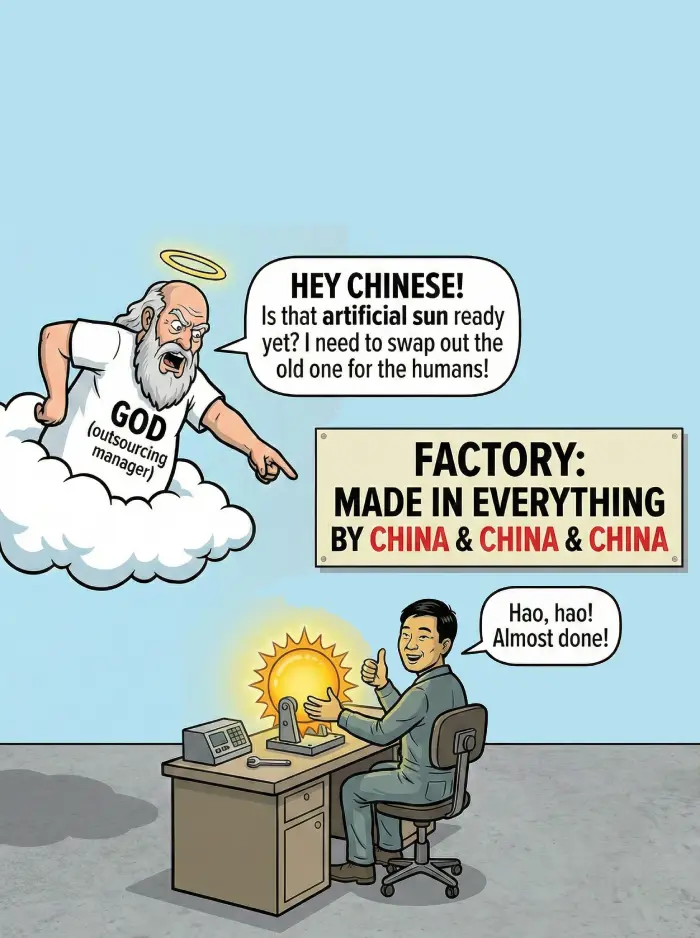
Series Title: Made in China: From Unrivaled Factory to the Chip War Dead End
Article Title: [Made in China EP.1] The China Paradox: Why the World Knows “How”, But Can’t Copy the “Factory”
For the past decade, we’ve heard the same predictions on repeat: “Manufacturing is moving to Vietnam,” “India is the next China,” or “Rising wages will end China’s reign.”
But here is the reality TruestWorld wants you to see today: Why haven’t those prophecies fully materialized? Why does Apple still rely heavily on China? Why has the world failed to successfully clone the “China Model”?
Welcome to the “Made in China” trilogy. In this series, we will dissect the anatomy of this economic superpower through three lenses you might have missed:
- EP.1: The Uncopyable Factory (Why is the Chinese factory model unbeatable?)
- EP.2: The Resource Trap (The hidden cost of EV graveyards and the global resource hunt.)
- EP.3: The Silicon War (The semiconductor dead end—China’s only fatal weakness.)
Let’s start with EP.1. The answer isn’t “cheap labor” anymore (Chinese factory wages are now often higher than in Thailand or Vietnam). So, what is their secret weapon? Here are the 3 hard truths.
1. The “50-Kilometer” Rule: The Power of Clustering
Imagine you are a startup trying to build a simple electric drill.
- In Shenzhen: You walk out of your office. Five kilometers away, you find a motor factory. Next block, a plastic injection molding plant for the grip. Across the street, a screw supplier. And ten kilometers down the road, a packaging facility. You can finish your prototype in 48 hours.
- In India or Vietnam: You might have to import the motor from China (2 weeks wait), source plastic from another city (via unpaved roads), and wait for screws from a different state. By the time you assemble one drill, your Chinese competitor has already shipped 100,000 units.
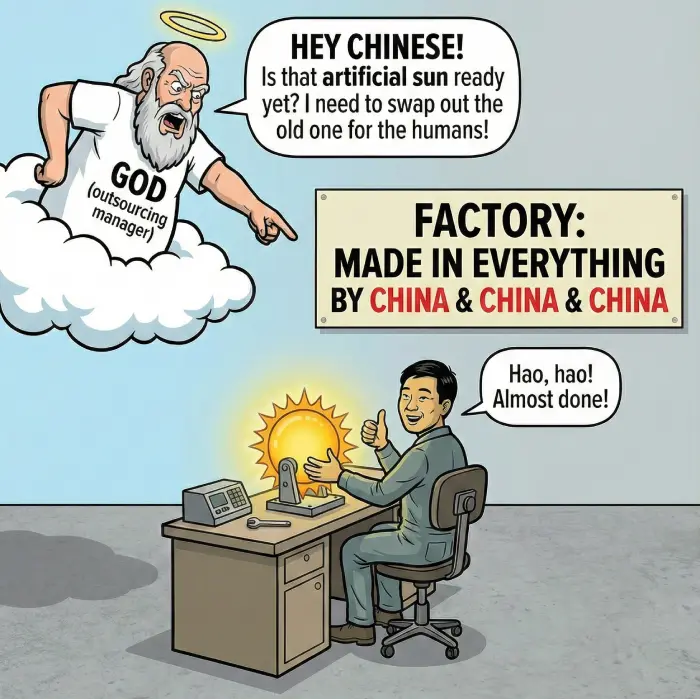
This is the Supply Chain Cluster—a “buffet-style” ecosystem China spent 30 years building. Other nations might build assembly plants, but they cannot instantly transplant this entire root system of tens of thousands of suppliers.
2. Infrastructure on Steroids: State Capitalism
In a typical capitalist economy, the government builds roads after development arrives. In China’s State Capitalism, the government builds them in anticipation.
China is home to 7 of the world’s top 10 busiest ports. High-speed rails transport goods from deep inland factories to coastal ports overnight. Meanwhile, in competitors like India or some ASEAN nations, business owners still wake up worrying: “Will there be a power outage today?” or “Will the truck get stuck in mud?”
This stability is a hidden premium that investors are willing to pay for. It guarantees that goods are delivered on time, every time.
3. The “Scale” Game: Killing with Volume
China doesn’t compete on “price per unit” in small batches; it competes on massive Volume. When a Chinese factory receives an order, they aren’t just producing 100,000 units. They are ready to churn out 100 million units to feed their own domestic market of 1.4 billion people, plus the rest of the world.
When production hits this scale, the cost per unit (Economy of Scale) drops to rock bottom. New competitors in other countries, just starting out, simply cannot compete with these prices. It is an invisible wall that keeps newcomers out.
Conclusion: The Irreplaceable Factory
“Decoupling” from China is possible only on the surface (like final assembly stages) to avoid tariffs. But the “core”—the upstream supply chain of raw materials, chemicals, and electronic components—remains shackled to the Chinese factory floor.
However… beneath this industrial grandeur lies a massive, hidden cost. From reckless resource consumption to overproduction that creates mountains of waste.
In the next episode, we will take you to the “Dark Side” of this accelerated growth. 👉 [Read Next – EP.2: EV Graveyards and Ghost Cities: When China Overproduces and Hunts for Global Resources] (Coming Soon)
Views: 0
Leave a Reply