
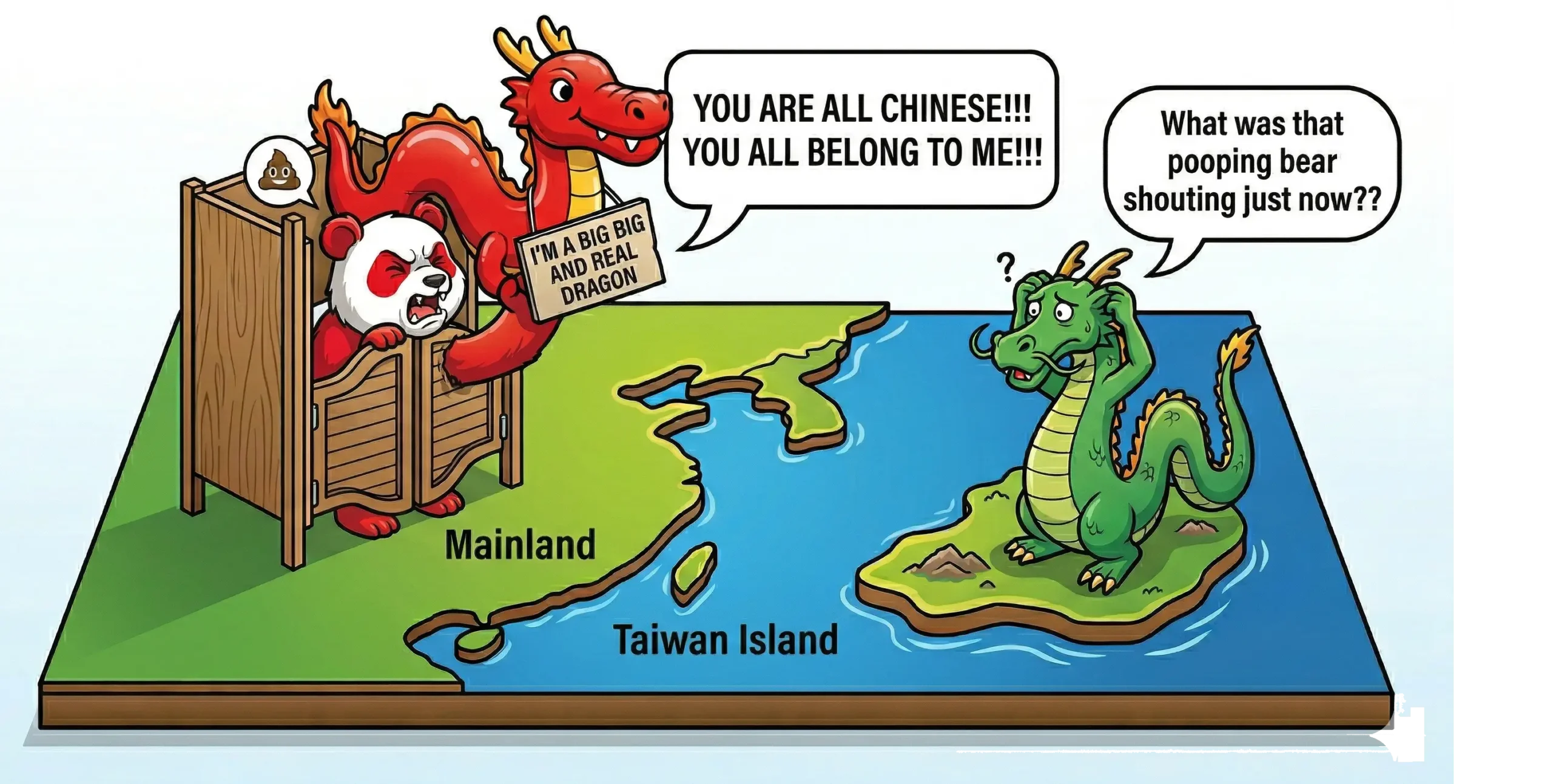
Exclusive Interview with a Former Chinese Armed Police Officer: “China Can Never Defeat Taiwan; The Military Rots from Top to Bottom”
Exclusive Interview by Ba Jiong | Published: March 2026
Interviewee: Sam (Pseudonym: Pi Pi Lu) — Former Chinese People’s Armed Police (PAP) Officer, served in Yili, Xinjiang in 1998.
In a world where analyses of China’s military capabilities are often churned out by academics who have never set foot inside a People’s Liberation Army (PLA) or People’s Armed Police (PAP) barracks, Sam’s voice carries a rare and heavy weight. He was on the inside. He ate the meager rations left after embezzlement, ran laps until his bones swelled, and secretly listened to Voice of America behind his commanders’ backs.
In 2023, Sam crossed the land border into the United States with his young son, leaving behind an export business and his familiar life. Today, he sits before the camera to tell the world—especially the people of Taiwan—the truth about how “strong” Beijing’s highly publicized war machine actually is in reality.
Part 1: The Military That “Buys and Sells” Everything
How did you end up in the Armed Police?
“I was 18. My parents made the decision, not me. I had been arrested for a brawl—even though I was just standing there as a witness for a friend. The police beat me with batons and shocked me with electric prods. I wasn’t fed for three days and had to drink water from a mop bucket. My parents thought sending me to the military would fix me with discipline.”
Is it true that everything in the Chinese military is for sale?
“Every single word of it. You want to enlist? You pay. You want to join the Communist Party? That was 500 RMB (in 1998). You want a driver’s license or to train as a medic? You pay. Promotions to sergeant or officer—everything requires money. Over 95% of soldiers come from rural areas because there’s no other way out. The military is basically a form of ‘hidden employment.’”
Where does the money for these ‘bribes’ come from?
“From our own food budget. In 1998, the daily food allowance per person was over 7 RMB, but half of it was embezzled. Soldiers simply didn’t have enough to eat. How can a starving army go to war? They can’t.”
Part 2: Where Did the Chickens Go? — The Reality of the Barracks
Can you share a direct example of corruption you witnessed?
“From Monday to Thursday, we starved. But Friday night was the ‘Big Feast.’ Headquarters mandated that every table must have a whole chicken and a whole fish. But by the time it reached the soldiers, it was just chicken necks, chicken butts, and fish tails. The good parts were sent to the commanders. If the budget allowed for 10 chickens per company, the soldiers got 5, and the other 5 became gifts for the leaders.”
Any other shocking stories, like regarding vehicles?
“One year, there was a surprise military drill. The colonel blew the whistle, and everyone had to rush to the base gate. The soldiers were fully prepped, but the vehicles never arrived. Why? Because the gasoline had been secretly sold off. This is why I say China can never win a war. The lowest levels are completely rotten. The gas is gone, soldiers are starving, yet they advertise their J-20 fighter jets as world-class.”
What are your thoughts on the J-20 and the recently arrested generals?
“It’s the exact same thing. The top lies to the top, and the bottom lies to the bottom. Research funds are embezzled. Yang Wei (head of the J-20 project) was arrested along with several generals, including two consecutive Defense Ministers—Li Shangfu and Wei Fenghe—and the commander of the Rocket Force. What does this tell you? The entire system is rotten. Twenty years have passed, and nothing has changed.”
Part 3: Life as a Prison — Violence and PTSD
You described your time in the military as the most painful period of your life?
“It was like a 3-year prison sentence. I was allowed to leave the base maybe 10 times total. You had to apply for leave, waiting for quotas that prioritized officers down to veterans. New recruits had almost no rights. Veterans hazed the new guys every day. Some were beaten until they suffered mental breakdowns; their families wouldn’t even take them back. Those guys stayed on base doing the hardest labor, shoveling coal until their faces were black. Some tried to escape by climbing the fence, only to be hunted down and imprisoned as ‘deserters.’”
You mentioned still having nightmares?
“Yes. I’ve been diagnosed with PTSD. My nightmares are still of running laps around the base field. We were punished and forced to run until our leg bones swelled, but we couldn’t stop because there were people behind us with batons and military belts. Sometimes I wake up in the middle of the night in a panic, still seeing that image.”
If soldiers are fighting each other like this, how can they fight a war?
“To be brutally honest, if they had handed out live ammunition back then, I’m not sure who I would have shot first—certain veteran soldiers or the commanders. The hatred ran that deep. Do you think a military in that state can fight an external enemy? No way.”
Part 4: Designed to Control the People, Not the Enemy
What was the actual primary mission of your unit?
“Bluntly speaking, to ‘intimidate the public.’ Every winter, we went out to shovel snow in Yining city. But the real goal wasn’t shoveling snow. My lieutenant told me, ‘You idiot, we’re out here to scare people. Let’s go.’ We marched out carrying guns, and the civilians were terrified. That was the job. If there’s an uprising, the government sends in the Armed Police first so it doesn’t look like the ‘People’s Army’ is blatantly suppressing the people.”
Was there anything special on June 4th (Tiananmen Square anniversary)?
“Every year, we had to be on ‘combat readiness’ status, both in Xinjiang and likely nationwide. It meant packing our bags and sitting there, waiting for orders. We didn’t know what we would be doing; we just weren’t allowed to go anywhere. In short, the entire Chinese military exists to handle ‘internal’ matters—whether it’s the Uyghurs, Tibetans, or regular citizens who might rise up. If they pull troops out of Xinjiang, Xinjiang becomes independent. If they pull troops from the mainland, the mainland might become like Taiwan.”
Part 5: Why China Has No Chance of Defeating Taiwan
Sam repeatedly emphasized two critical elements required for war:
- The People: “From the lowest ranks to the top generals, everyone is in the system to ‘make a living,’ not to fight. Soldiers join because there are no jobs in their villages. Officers get promoted because they paid for it. High-ranking commanders only care about construction projects so they can give contracts to their relatives. I estimate a colonel can make at least 1 million RMB during their tenure. No one is there to actually go to war.”
- The Weapons: “The best products are exported because they have to pass international quality checks. Domestic equipment? It doesn’t need to pass anything. Just bribe the right person. We’ve seen missiles filled with water instead of fuel. Iran uses Chinese weapons—and the results on the battlefield speak for themselves.”
If China can’t fight, why is Taiwan still afraid?
“Because Information Warfare is what China does best. They don’t want to fight; they want Taiwan to surrender without firing a single shot. Buy off politicians, spread disinformation, look terrifying, and wait for people inside Taiwan to open the city gates themselves. They spend heavily on cognitive warfare despite a failing economy because it’s their primary weapon. If it comes to an actual kinetic war, Taiwan will win. Taiwan’s weapons and morale are vastly superior. Ukraine fights fiercely with fewer weapons than Taiwan has.”
Part 6: The Path to Awakening and Crossing the Border
What sparked your ‘awakening’ against the government?
“It started in the military. My girlfriend sent me a Degen shortwave radio. Out of boredom, I tuned in and heard Voice of America (VOA) for the first time. That was the turning point. After leaving the military, I did export business, traveled to Hong Kong, and bought books at Causeway Bay Books. I realized another world actually existed.”
How did you decide to leave?
After participating in several protests, like against a waste incinerator in Guangdong, my name ended up on a dissident watchlist of about 30,000 people. I was interrogated multiple times. When Xi Jinping took power, friends started disappearing. Some were arrested; some fled. I knew it wasn’t safe anymore. In 2023, I took my son and fled to the US.”
Do you have a message for the Taiwanese people?
“Don’t be afraid of China. Pour resources into creating VPNs so mainlanders can access real information. If the Chinese people wake up, Taiwan is safe. And secondly—be prepared for the day swords clash. Ukraine fought back with less; Taiwan definitely can too. Just don’t surrender before the fight even begins.”
Epilogue: The Price of Speaking Out
Sam knows there is a heavy price for speaking publicly. The “Digital Totalitarianism” he refers to means that the moment this video is uploaded to YouTube, Chinese police could immediately knock on his parents’ door back in China. That is why the “silent majority” of overseas Chinese choose to stay quiet—not because they agree with Beijing, but out of fear.
He references the ancient Chinese fable of the “Foolish Old Man Who Removes the Mountains” (愚公移山). Sam knows he might not live to see the fall of the CCP, but he places his hope in his son and future generations who will grow up in a free land.
“I have fought. I have shouted. But now, I am protecting my ‘seed.’ I brought my son to grow up in America, because dismantling the Chinese Communist Party is not the work of just one generation.”
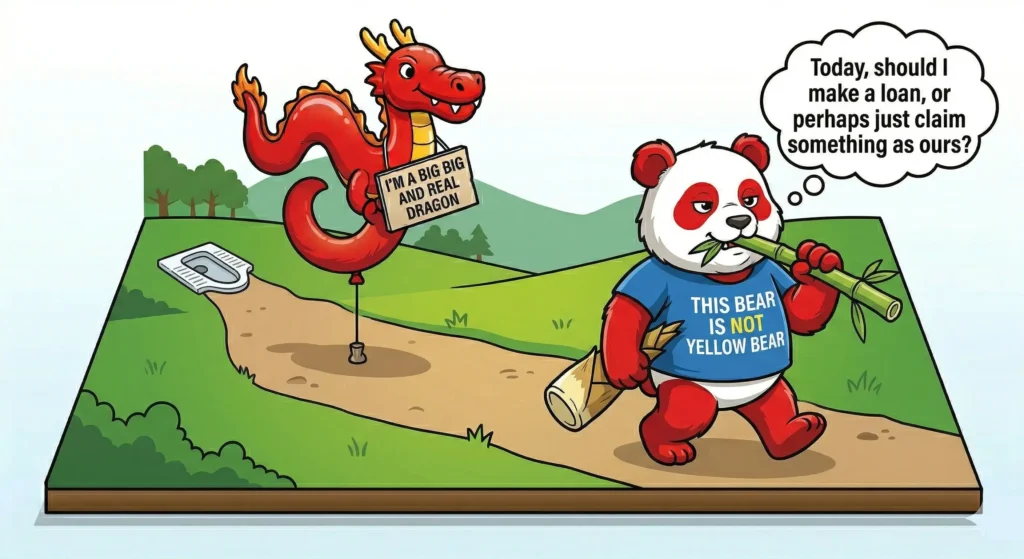
TruestWorld Analysis: The Illusion of Power vs. The Reality of Cognitive Warfare
Sam’s interview is more than just a recounting of past experiences from a former military officer; it serves as a “crucial puzzle piece” that sharply explains the geopolitical friction in the Taiwan Strait. By analyzing this ground-level perspective alongside the current global context, TruestWorld highlights the following key takeaways:
1. The Hardware vs. Software Discrepancy
Military might is often measured by the sheer number of warheads, submarines, or fifth-generation fighter jets (such as the J-20). However, Sam points out that the military’s “software”—its personnel—is severely corroded by a system of patronage and rampant corruption. This firsthand account aligns with the actual events of 2023-2024, which saw sweeping purges and the dismissal of top-ranking generals within China’s Rocket Force. It reinforces the reality that the greatest weakness of the Chinese war machine is not its technological capability, but its deep-rooted “structural issues” that undermine logistics and troop morale.
2. Stability Maintenance (Wei Wen)
This interview effectively confirms the political science hypothesis that the primary mission of the Chinese military apparatus (both the PLA and PAP) is to maintain domestic stability (Wei Wen – 維穩) and safeguard the absolute power of the Communist Party, rather than preparing for wars of territorial expansion. Massive budgets and resources are dedicated to suppressing unrest in regions like Xinjiang and Tibet, and monitoring citizens during politically sensitive anniversaries. Deploying a massive force for a complex amphibious assault on Taiwan would inevitably create a security vacuum, risking severe internal instability within China’s own borders.
3. The Real Battlefield: Cognitive Warfare
Perhaps the most vital warning for Taiwan and the international community is Sam’s assertion: “China does not want to fight; it wants Taiwan to surrender on its own.” This is the very core of Cognitive Warfare. The spreading of disinformation, election interference, and the manufacturing of an illusion of unstoppable military supremacy are all calculated tactics designed to erode the Taiwanese people’s will to fight.
Conclusion:
Sam’s story illustrates a vital lesson: Taiwan and its democratic allies must not underestimate China’s capabilities in “information warfare and infiltration.” Simultaneously, they must not be overly intimidated by the “military illusions” fabricated by Beijing to instill fear. Standing firm with factual resilience and building institutional strength from within remain the most effective shields in this New Cold War era.
Views: 0