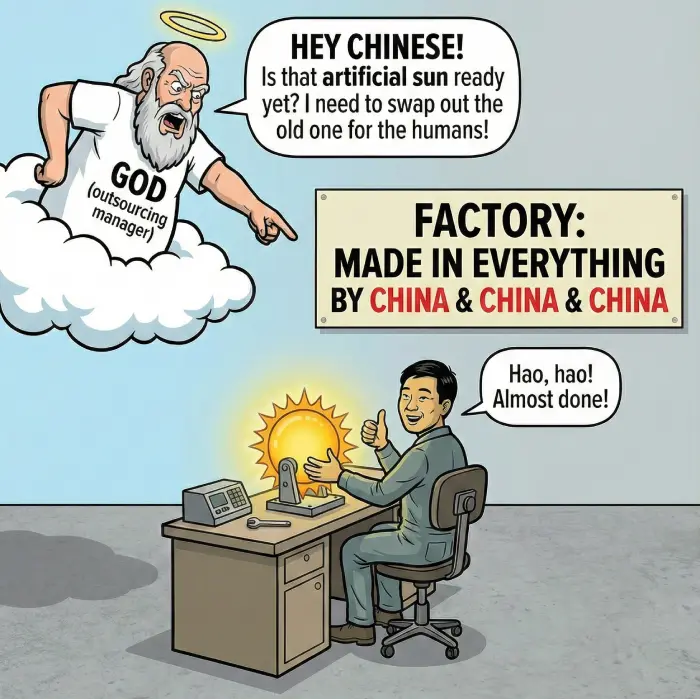
But in EP.3, we confront a bitter irony: A nation capable of building an “Artificial Sun” and landing rovers on the dark side of the moon cannot manufacture a tiny, fingernail-sized square called an “Advanced Semiconductor.”
And this tiny square is the “Kill Switch” currently held in the hands of the United States.
1. The Great Divide: Master of the Low-End, Failure at the High-End
First, let’s be clear: China knows how to make chips.
Legacy Chips (28nm and above): These are the chips found in cars, washing machines, and TVs. China is excellent at producing them and is on track to flood the global market with cheap supply.
Advanced Chips (Below 7nm): These are the “brains” of AI, Supercomputers, and the latest iPhones. Here, China is dead in the water.
Why? Because manufacturing these chips requires a machine called EUV Lithography (made by ASML), arguably the most complex machine in human history. The US has strictly forbidden its sale to China.
2. Big but Blind: An Army with Bad Eyesight
This isn’t just about iPhones; it’s about War. Modern weaponry isn’t measured by the size of the explosion, but by “Intelligence.”
Hypersonic Missiles: Require high-speed processing chips to maneuver.
J-20 Fighter Jets: Need precise radar chips to detect enemies.
Smart Drones: Rely on AI chips to identify targets.
Without advanced chips, the Chinese military might have more ships than the US (Quantity), but their guidance systems could be “dumber” and “slower” (Quality) in actual combat. This is a risk Beijing cannot accept.
3. The Desperate Chase: The Dragon’s Last Bet
Strangled by sanctions, China is making a desperate “Manhattan Project” style gamble.
Unlimited Budget: The government’s “Big Fund” is pouring trillions of yuan into building domestic chip-making equipment (even if it lags 10 years behind the West).
Headhunting & Poaching: China is hiring top engineers from Taiwan and South Korea with astronomical salaries, hoping to shortcut the R&D process.
Secret Workarounds: They are experimenting with “Chiplet” technology—stacking multiple older chips together to mimic the performance of a newer one—just to survive the blockade.
Trilogy Conclusion: The Giant with a Fatal Flaw
The Made in China series ends with this crystal-clear image: China is a giant with a muscular body (The Factory – EP.1) and excellent blood circulation (Resources – EP.2)… but the “Brain” (Chips – EP.3) is still held hostage by its rival.
As long as China cannot manufacture this “Brain” domestically, its dream of becoming the world’s undisputed superpower remains a fragile illusion. This explains why Taiwan (home to TSMC, the world’s #1 chipmaker) is the most dangerous place on Earth… it holds the final puzzle piece the Dragon is missing.
Series Title: Made in China: From Unrivaled Factory to the Chip War Dead End
Article Title: [Made in China EP.1] The China Paradox: Why the World Knows “How”, But Can’t Copy the “Factory”
For the past decade, we’ve heard the same predictions on repeat: “Manufacturing is moving to Vietnam,”“India is the next China,” or “Rising wages will end China’s reign.”
But here is the reality TruestWorld wants you to see today: Why haven’t those prophecies fully materialized? Why does Apple still rely heavily on China? Why has the world failed to successfully clone the “China Model”?
Welcome to the “Made in China” trilogy. In this series, we will dissect the anatomy of this economic superpower through three lenses you might have missed:
EP.1: The Uncopyable Factory (Why is the Chinese factory model unbeatable?)
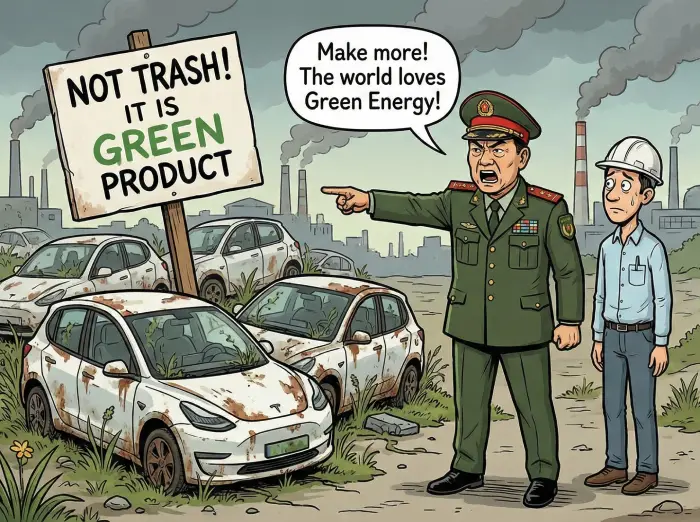
EP.2: The Resource Trap (The hidden cost of EV graveyards and the global resource hunt.)
EP.3: The Silicon War (The semiconductor dead end—China’s only fatal weakness.)
Let’s start with EP.1. The answer isn’t “cheap labor” anymore (Chinese factory wages are now often higher than in Thailand or Vietnam). So, what is their secret weapon? Here are the 3 hard truths.
1. The “50-Kilometer” Rule: The Power of Clustering
Imagine you are a startup trying to build a simple electric drill.
In Shenzhen: You walk out of your office. Five kilometers away, you find a motor factory. Next block, a plastic injection molding plant for the grip. Across the street, a screw supplier. And ten kilometers down the road, a packaging facility. You can finish your prototype in 48 hours.
In India or Vietnam: You might have to import the motor from China (2 weeks wait), source plastic from another city (via unpaved roads), and wait for screws from a different state. By the time you assemble one drill, your Chinese competitor has already shipped 100,000 units.
This is the Supply Chain Cluster—a “buffet-style” ecosystem China spent 30 years building. Other nations might build assembly plants, but they cannot instantly transplant this entire root system of tens of thousands of suppliers.
2. Infrastructure on Steroids: State Capitalism
In a typical capitalist economy, the government builds roads after development arrives. In China’s State Capitalism, the government builds them in anticipation.
China is home to 7 of the world’s top 10 busiest ports. High-speed rails transport goods from deep inland factories to coastal ports overnight. Meanwhile, in competitors like India or some ASEAN nations, business owners still wake up worrying: “Will there be a power outage today?” or “Will the truck get stuck in mud?”
This stability is a hidden premium that investors are willing to pay for. It guarantees that goods are delivered on time, every time.
3. The “Scale” Game: Killing with Volume
China doesn’t compete on “price per unit” in small batches; it competes on massive Volume. When a Chinese factory receives an order, they aren’t just producing 100,000 units. They are ready to churn out 100 million units to feed their own domestic market of 1.4 billion people, plus the rest of the world.
When production hits this scale, the cost per unit (Economy of Scale) drops to rock bottom. New competitors in other countries, just starting out, simply cannot compete with these prices. It is an invisible wall that keeps newcomers out.
Conclusion: The Irreplaceable Factory
“Decoupling” from China is possible only on the surface (like final assembly stages) to avoid tariffs. But the “core”—the upstream supply chain of raw materials, chemicals, and electronic components—remains shackled to the Chinese factory floor.
However… beneath this industrial grandeur lies a massive, hidden cost. From reckless resource consumption to overproduction that creates mountains of waste.
In the next episode, we will take you to the “Dark Side” of this accelerated growth. 👉 [Read Next – EP.2: EV Graveyards and Ghost Cities: When China Overproduces and Hunts for Global Resources](Coming Soon)
🇺🇸 America’s image during this period: The U.S. positioned itself as the Leader of the Free World.
Polite in speech, diplomatic, full of etiquette and sweet words — yet still undeniably powerful.
Built alliances such as NATO, the UN, G7, IMF, WTO.
Supported a “New World Order” where American rules were central.
Soft power was at its peak — Hollywood, McDonald’s, Apple, Dream.
🤝 The world tacitly accepted America: “Yes, the U.S. may have its own interests, but at least it’s keeping the world in decent order.”
🧱 Trump Era: “From Hidden Emperor to Open Emperor”
“No need to pretend we’re allies. We all know I’m the superpower you depend on.” – Donald Trump (in various versions 😂)
What Trump did was: Break every tradition past U.S. leaders had followed.
Rejected multilateralism → shifted toward pure hard power.
Withdrew from several agreements: TPP, WHO, Paris Climate Agreement, etc.
Intimidated allies: told NATO to pay more or lose support.
Openly hated China: used racially charged language in public.
Used social media as a political weapon (especially Twitter).
💥 The result: “The America we once knew” disappeared.
Allies began to distrust the U.S. and sought ways to survive without depending on it.
Old rivals (like China, Russia, Iran) seized the moment to expand influence.
🔮 Post-Trump America: “Losing Balance or Adapting?”
🎭 Joe Biden returned to the “classic tone,” attempting to “restore the pre-Trump order.”
But it’s no longer the same.
The world hasn’t forgotten the “Trump moment” that exposed America’s true hand.
🧠 What the world learned from the Trump era: The U.S. can no longer hide its darker side.
Can one leader really shift national policy this drastically? → Is the system unstable?
Allies began forming “backup plans,” like:
Europe developing its own SWIFT system
Saudi Arabia making more deals with China and Russia
Asia shifting focus from TPP to RCEP
📌 Even though Biden tries to “repair relationships,” the sentiment remains: “You may forgive… but you don’t forget.” – A European diplomat said after meeting with Biden in 2021.
🏛 If we were to compare:
Before Trump = A Roman Emperor in golden robes (rhetoric + hidden power) Trump = Took off the robe and walked the streets with a hammer (I’m the biggest; disagree and I’ll cut your funds) After Trump = Trying to put the robe back on, but it’s torn (The world says “I’ve seen your true form.”)
💡 Speculative analysis from the future:
If Trump returns (a real possibility in 2024–2025), The world may enter an era of “Global Order Instability.” Nations might shift into “survival mode” rather than cooperation.
The U.S. could become a “superpower no one wants to rely on.”
The world might move into a multipolar multilateralism era, with China–India–EU–Russia as alternative power poles.
And America’s soft power may keep fading, if its image as a “model to follow” continues to erode.
🧱 Trump Era 2.0: “The Return of Far-Right America”
Trump’s Return – Not Revenge, But Realignment
🎯 Key Foundation:
This time, Trump is not the same man from 2016. He is now:
Someone who has already held power
Someone who knows where the system blocks him
Surrounded by allies ready to openly dismantle the Deep State
🔥 What’s different from Trump’s first term:
Topic
Trump’s First Term (2016)
Trump’s Second Term (2025)
Positioning
“America First”
“America Only”
Approach
Breaking norms while still within the system
Intentionally aims to “revolutionize the system” using popular support
Foreign Negotiations
Threats and intimidation to get better deals
Actual withdrawal and severing of ties
Alliances
Reduced NATO involvement
Possible full withdrawal from NATO
China Relations
Primary adversary
Preparing for a full-scale cold war
Media & Domestic Institutions
Complained about the media
Determined to control media, judiciary, and government agencies
🧨 “The World Order After 2025” – What Might Happen?
🧭 1. The World Fully Enters a “Multipolar” Era
The U.S. will increasingly shut itself off from the world.
The EU, China, India, and Russia will rise as continental powers.
Global alliances will form not by ideology, but by who offers the best chance of survival.
💵 2. The Global Economy = “A Battlefield of Trade”
Tariffs and tech bans will spike.
Global supply chains may become closed loops within each alliance bloc.
Multinational companies will face pressure to choose sides.
🎖 3. Rising Global Tensions
If Trump pressures NATO, Ukraine may be left to stand alone.
Taiwan could become a flashpoint if China perceives U.S. retreat.
The Middle East may heat up as the U.S. pulls back from its role as global policeman.
🗽 4. America’s Soft Power = “An Illusion?”
Artists, celebrities, and scientists may begin leaving the country.
The image of America as “the land of opportunity” may shift to a land of chaos.
Foreign admirers who once said “I want to be like America” may start rethinking.
🎬 Summary:
Trump’s second term could be:
The end of a U.S.-led world order
The beginning of an era of domestic rule over global dominance
A global atmosphere reminiscent of pre–World War I → Multiple power blocs → Overlapping tensions → A spark waiting to ignite
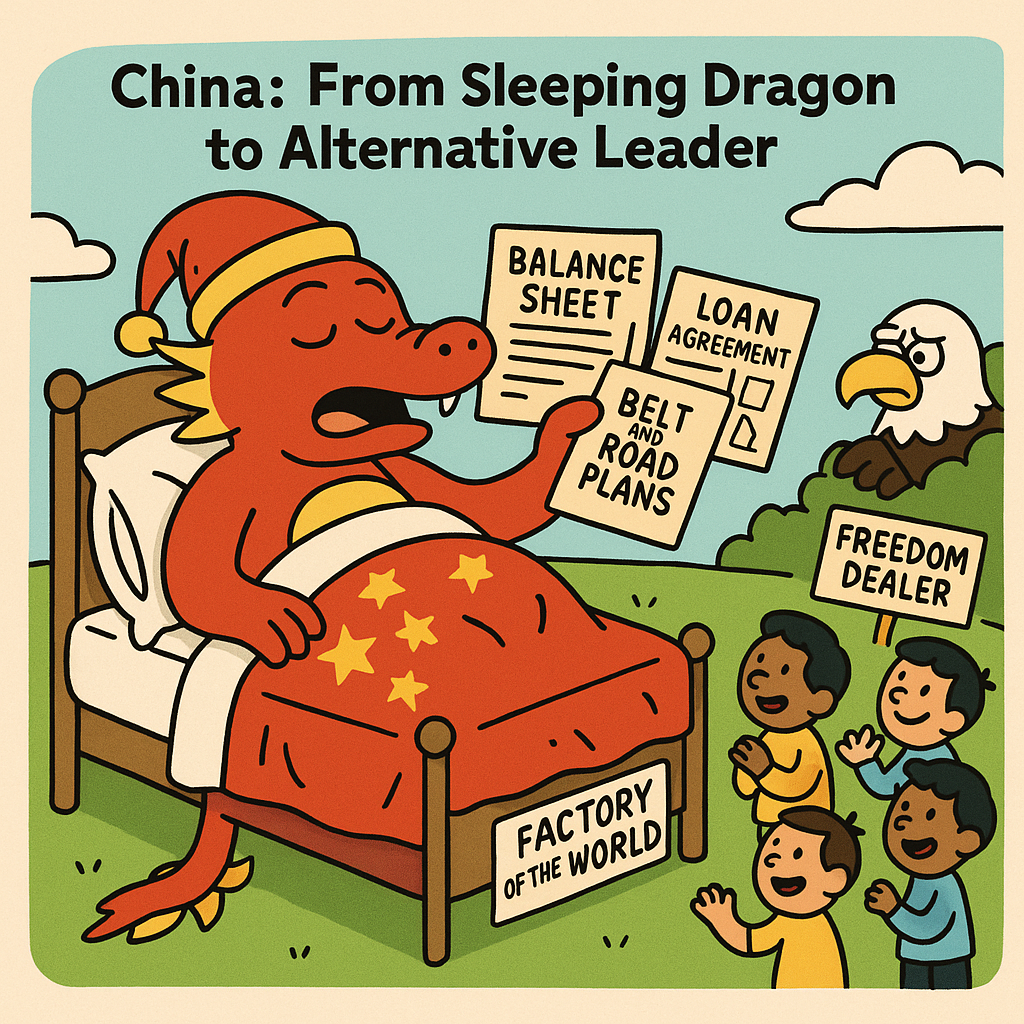
🐉 China: “From Sleeping Dragon to Alternative Leader”
🌏 Before China’s Rise:
China was once seen as “the world’s factory”: – Cheap goods, abundant labor, and massive profits – But staying out of global political affairs
Behind the scenes, though: China was quietly playing the long game.
📈 When China Started Rising:
The “Belt and Road Initiative” (BRI) – a modern Silk Road → Billions of dollars poured into global infrastructure, especially in developing nations
Established new financial institutions to rival the IMF/World Bank, like AIIB (Asian Infrastructure Investment Bank)
Money over military → Instead of sending troops, China uses financial tools, mega-projects, and loans to influence geopolitics.
💬 China’s Soft Power:
Spread culture through Confucius Institutes
Promote Chinese culture via dramas, KOLs, and Chinese-language social media
Achieved success in global tech industries (Huawei, TikTok, DJI)
😐 The World Sees China in Two Contrasting Lights:
One side: “China is an economic opportunity”
The other side: “China is a threat to freedom”
🌐 In a Post-Trump World:
As America lays all its cards on the table and allies start to waver, China is emerging as the “alternative” many nations are starting to consider.
📌 Especially in countries that are tired of the American-led system, like:
African nations: Frustrated with what they see as overbearing IMF and World Bank conditions
Some Asian countries: Looking for capital, not wanting to depend solely on the U.S.
Russia: Growing even closer to China, sharing the same goal → no single global ruler
🧠 China’s Grand Strategy:
Not to lead the world like America, But simply to ensure the world doesn’t need a single leader.
As if saying:
“You don’t need to love us… Just don’t rely on them 100%.”
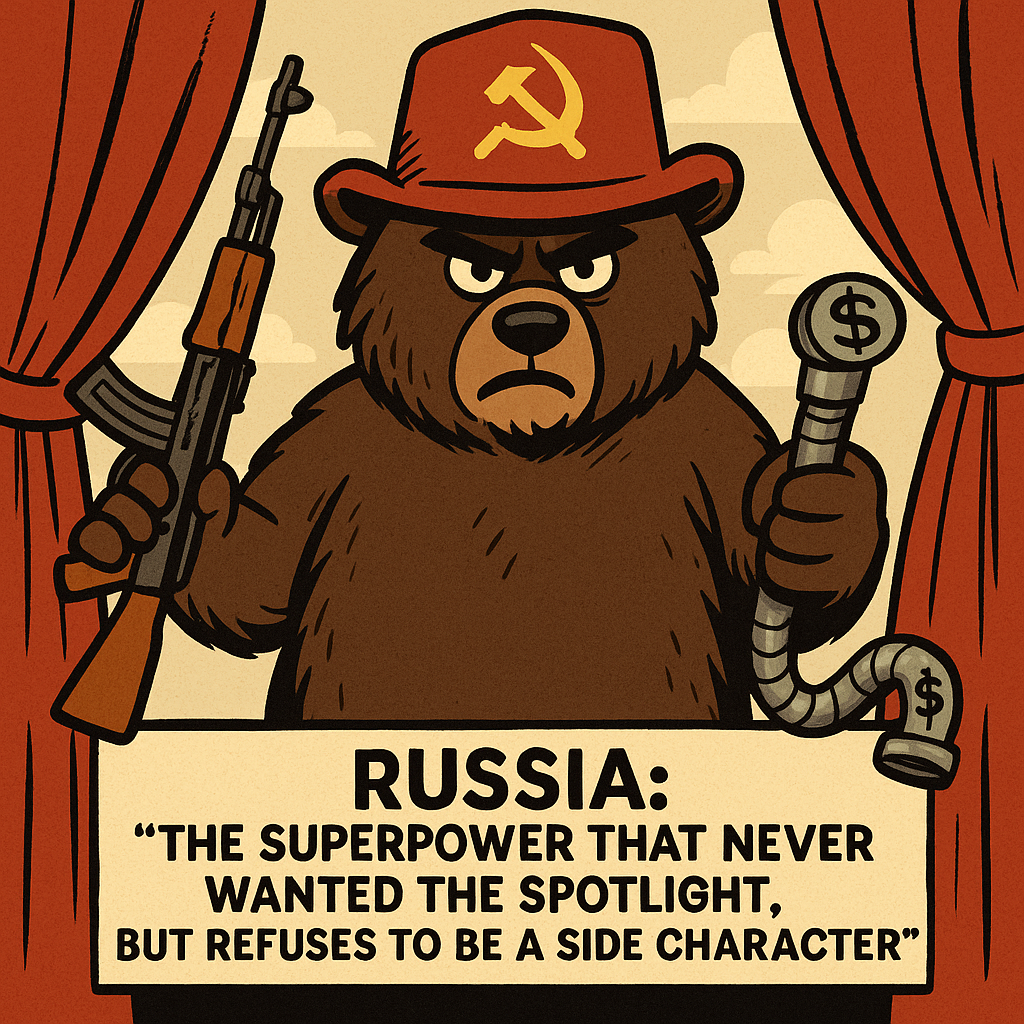
🪖 Russia: “The Superpower That Never Wanted the Spotlight, But Refuses to Be a Side Character”
⏳ A History That Never Fades:
Russia isn’t like China, which grew quietly — Russia is an “old superpower.” The former Soviet Union once clashed head-on with the U.S. during the Cold War. Even though it collapsed in 1991, the “superpower spirit” never disappeared.
🧊 The Cold War Never Truly Ended:
After the USSR fell, Russia appeared to step back… But once Putin came to power in 2000, the game changed.
“Putin’s Russia is a wolf that got its fangs back.”
🔥 How Russia Plays the Game:
Russia doesn’t aim to create a new world system like China. Instead, its strategy is: “If I can’t lead the world, then no one else should be able to either.”
🇷🇺 Russia’s Grand Strategy:
Weaponizing energy: Europe, especially Eastern Europe, relies on Russian gas and oil
Fueling political division in Europe and the U.S. (evidence of election interference, etc.)
Expert at proxy wars: Syria, Libya, Africa, Ukraine
📡 On the Soft Power Front:
Expands its narrative via RT (Russia Today) and alternative media outlets
Supports anti-globalist, far-right, and anti-NATO movements
Sells itself as the “alternative to the Western worldview”
🪙 Small Economy, Big Impact:
Russia’s GDP isn’t in the world’s top 5, But it’s rich in energy, minerals, and weapons.
Its role in OPEC+ gives it influence over oil prices
One of the world’s top arms exporters, especially to nations that don’t want to rely on the West
💣 The Ukraine War: A Turning Point for the World
The invasion of Ukraine in 2022 led to severe Western sanctions on Russia. But instead of crumbling, Russia turned its back on Europe and pivoted to Asia.
China, India, the Middle East, and Africa became its new trading partners. While they may not outright support Russia, they don’t openly condemn it either.
🌍 Perspective from the Global South:
Many nations see Russia as a counterbalance to the Western world. When NATO seems too aggressive, Russia acts as a counterweight.
African nations have started buying arms or hiring mercenaries from Russia (e.g., Wagner Group).
Russia may not be the “hero” reshaping the world, but it’s the one saying:
“No one should reshape the world alone.”
📌 If China is “the new alternative,” 📌 Then Russia is “the resistance to having only one choice.”
🇮🇳 India: “An alternative power bloc that doesn’t need to follow anyone” 🕉️ A naturally great nation India doesn’t need to try hard to “appear big” — because it truly is big.
The most populous country in the world (surpassing China)
7th largest land area globally
An ancient civilization with deeply “classical” roots (Not just India, but the source of influence for Buddhism, Hinduism, and South Asian culture)
But what makes India most intriguing is…
“Being a great power that deliberately chooses a middle path.”
⚖️ India doesn’t pick sides — it picks itself
India is not a member of NATO
Not a close ally of China or the U.S.
India is part of BRICS (China, Russia, Brazil, South Africa) Yet at the same time, it cooperates with the QUAD (Japan, U.S., Australia) to counterbalance China
India is exceptionally skilled at “multi-table diplomacy” — like a diplomat who talks to everyone without owing anyone.
🛕 India’s Strengths:
Soft Power is incredibly strong
Bollywood, Yoga, the depth of Indian philosophy
Indian cuisine is found globally (because curry shops are a force!)
Technology is on the rise
World’s largest digital ID system (Aadhaar)
Launches low-cost satellites — and already landed on the moon’s south pole!
A global hub for outsourcing, IT, and software engineers
A democracy where people still have a voice
India hosts the largest democratic elections in the world
Despite some issues, people have real voting power, and politics remains vibrant and open
A growing economy with solid fundamentals
India’s growth relies heavily on its domestic market, unlike China’s export-focused model
A massive and youthful workforce is entering a “demographic bonus” phase
“India doesn’t try to lead the world… But it wants the world to accept that being true to oneself is also a form of power.”

![[Made in China EP.3] The Silicon War: When a Fingernail-Sized Chip Becomes the Wall the Chinese Army Cannot Climb](https://truestworld.com/wp-content/uploads/2026/01/made-in-china-ep3.webp "[Made in China EP.3] The Silicon War: When a Fingernail-Sized Chip Becomes the Wall the Chinese Army Cannot Climb 1 Truest World")
![[Made in China EP.1] The China Paradox: Why the World Knows “How”, But Can’t Copy the “Factory”](https://truestworld.com/wp-content/uploads/2026/01/god-cover4.webp "[Made in China EP.1] The China Paradox: Why the World Knows \"How\", But Can't Copy the \"Factory\" 4 Truest World")